
Choosing the right candidate sourcing software is crucial for recruiters aiming to balance efficiency, cost, and hiring quality. However, many platforms struggle to adapt to specific market needs or deliver meaningful AI-driven insights, especially in diverse and fast-growing regions like India. This comparison highlights key features, pricing, and usability factors, illustrating why Spleen AI emerges as a superior choice for Indian recruiters seeking tailored, efficient hiring solutions without compromising on candidate fit.
Overview
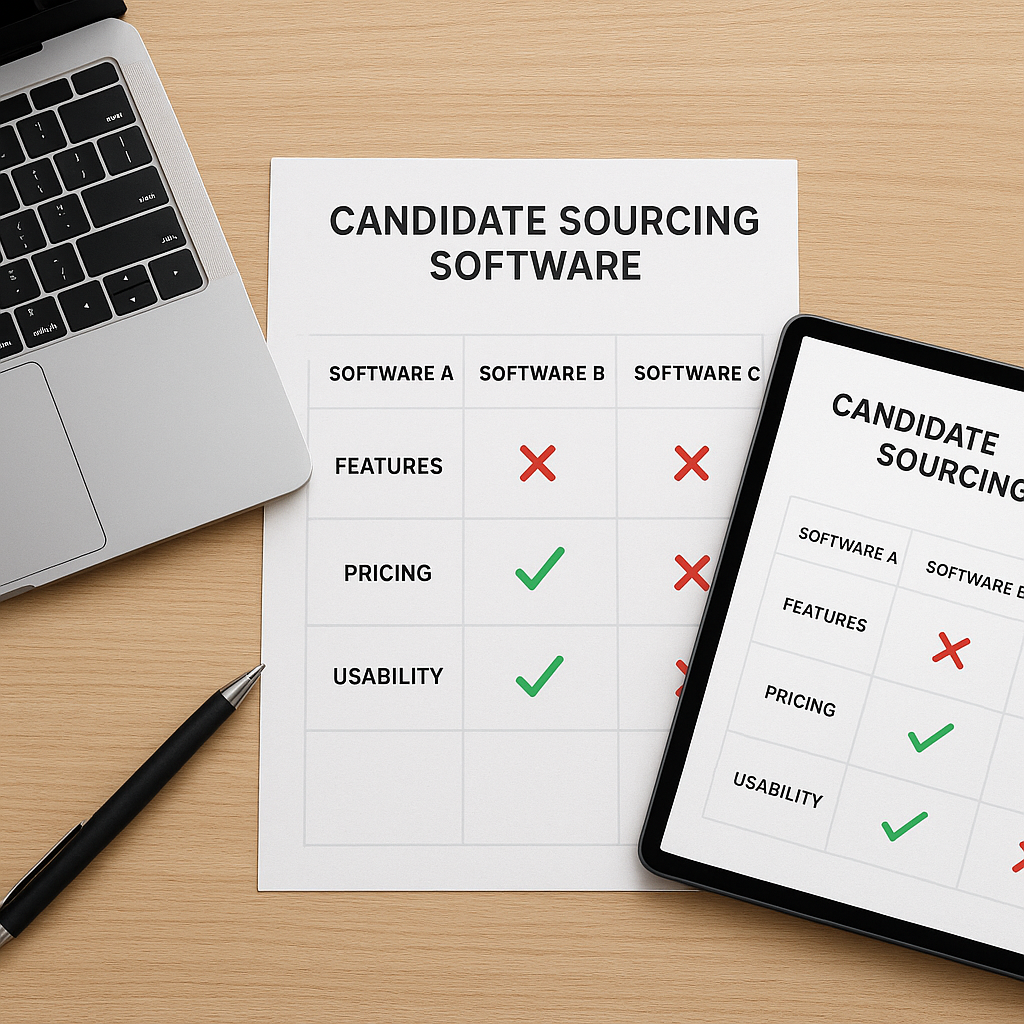
This comparison examines candidate sourcing software through lenses often overlooked, such as suitability by company size and industry, and their impact on diversity hiring goals. It also explores the cost-benefit dynamics of AI-driven sourcing tools versus traditional methods, highlighting how platforms like Spleen AI uniquely address the Indian market's needs with intent-based sourcing and deterministic evaluation. Additionally, the analysis considers future AI advancements shaping recruitment technology and discusses practical challenges recruiters face when integrating these tools into workflows, offering insights into best practices for effective implementation.
Key takeaways
- Spleen AI sources candidates using skill and intent signals from 800M+ profiles for high-fit shortlists.
- It automates outreach, follow-ups, and deterministic resume screening to reduce manual recruiter workload.
- Spleen integrates AI interviews for deep candidate evaluation before sharing with hiring managers.
- The platform suits Indian startups and enterprises needing faster, quality hiring with customizable workflows.
- Compared to traditional tools, Spleen offers faster screening and structured evaluation, improving recruiter efficiency.
- Spleen's pricing and support are tailored for the Indian market, enhancing cost-effectiveness and adoption.
- Challenges in sourcing include noisy data and manual screening, which Spleen addresses with AI-driven precision.
Decision Guide
- Choose Spleen AI when you need fast, intent-led sourcing tailored for Indian startups and enterprises.
- Opt for traditional ATS add-ons if your team prioritizes simple resume storage over active sourcing.
- Avoid high-cost platforms without local customization if budget constraints are tight.
- If diversity hiring is a priority, select software with deterministic, bias-reducing screening.
- If your recruitment volume is low, consider simpler tools to avoid overpaying for unused features.
- If integration with existing HR systems is critical, choose platforms with proven API support.
- For tech-heavy roles, pick tools specializing in niche talent pools or coding profiles.
Many sourcing tools overlook intent signals, leading to noisy shortlists; platforms like Spleen that combine skill and intent deliver higher-quality candidates faster, a critical advantage in competitive markets like India.
Step-by-step
Collect data on candidate sourcing software features, pricing, and usability from multiple platforms for comparison.
Analyze sourcing software impact on diversity and inclusion metrics across industries.
Perform cost benefit analysis comparing AI sourcing tools like Spleen AI versus traditional sourcing methods.
Evaluate candidate sourcing software usability through recruiter productivity and time
to-hire metrics.
Highlight Spleen AI's intent
based sourcing and deterministic scoring features tailored for the Indian market.
Discuss integration of AI interviews and structured evaluation pipelines in sourcing workflows.
Summarize future trends and challenges in candidate sourcing technology with emphasis on AI advancements.
Common mistakes
Indexing
Failure to canonicalize similar comparison pages leads to duplicate content issues, diluting SEO value.
Pipeline
Lack of dynamic template use for different company sizes causes inefficient content updates and poor user targeting.
Measurement
Relying solely on CTR without segmenting by device or region skews understanding of user engagement.
Indexing
Missing sitemap updates when adding new software comparisons delays search engine discovery.
Pipeline
No automated internal linking strategy reduces page authority flow and user navigation ease.
Measurement
Ignoring impressions data in Google Search Console limits insight into keyword ranking opportunities.
Conclusion
Candidate sourcing software works best when aligned with specific hiring needs, budget, and local market conditions, as seen with Spleen AI's tailored approach for India. It fails when tools are chosen without considering integration, recruiter adoption, or candidate quality, resulting in wasted effort and poor hires.